Loading




Educational quiz game
A quiz game where the questions come from the syllabus
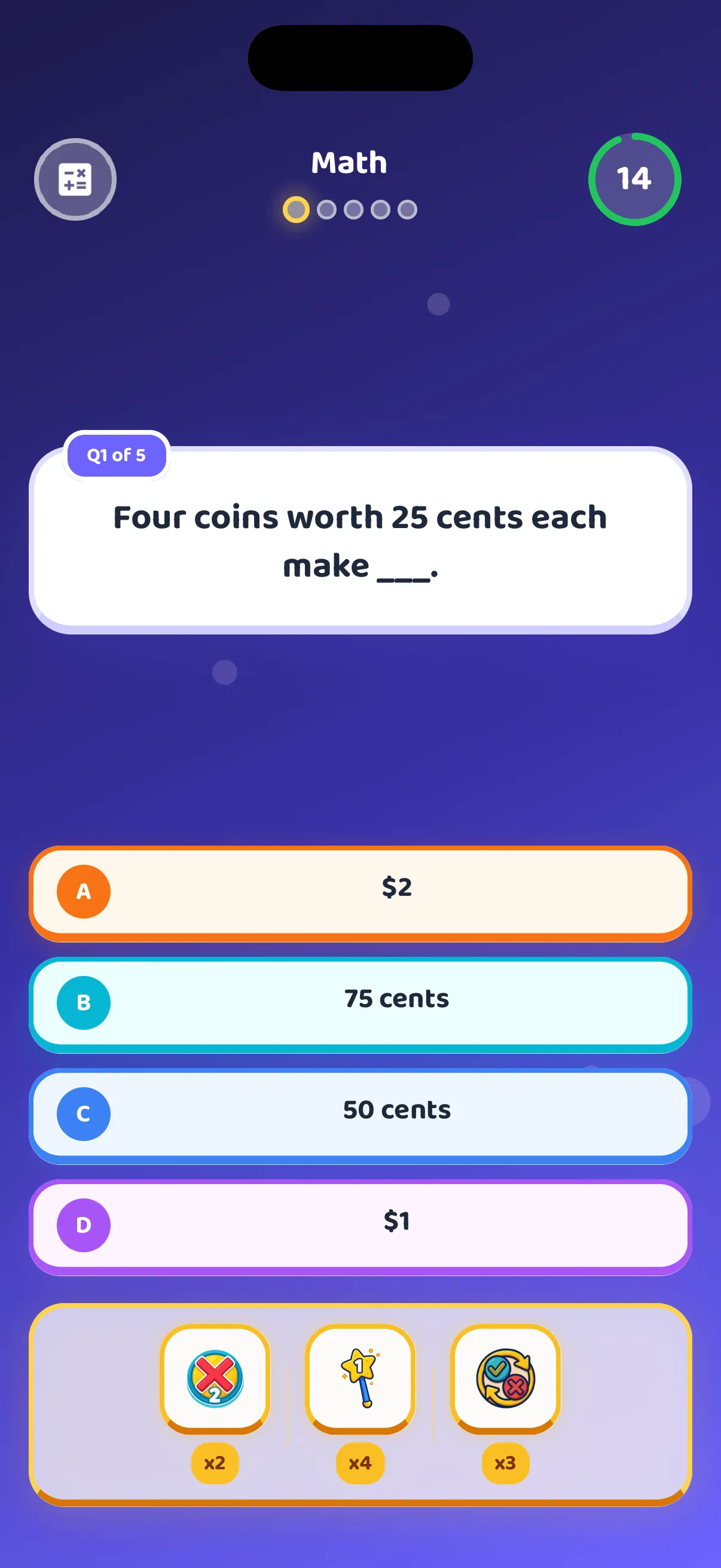
Short rounds, instant feedback, and an explanation after every answer. The format is the oldest trick in teaching — ask, answer, find out why — and it is what the whole app is built out of.
Try it
Answer one yourself
This is a website demo, not the app, but the questions sit inside the same Grade 1–6 curriculum. Pick a grade and a subject.
Website demoMath · Grades 3–4
What is 8 × 7?
Modes
Four ways a round can go
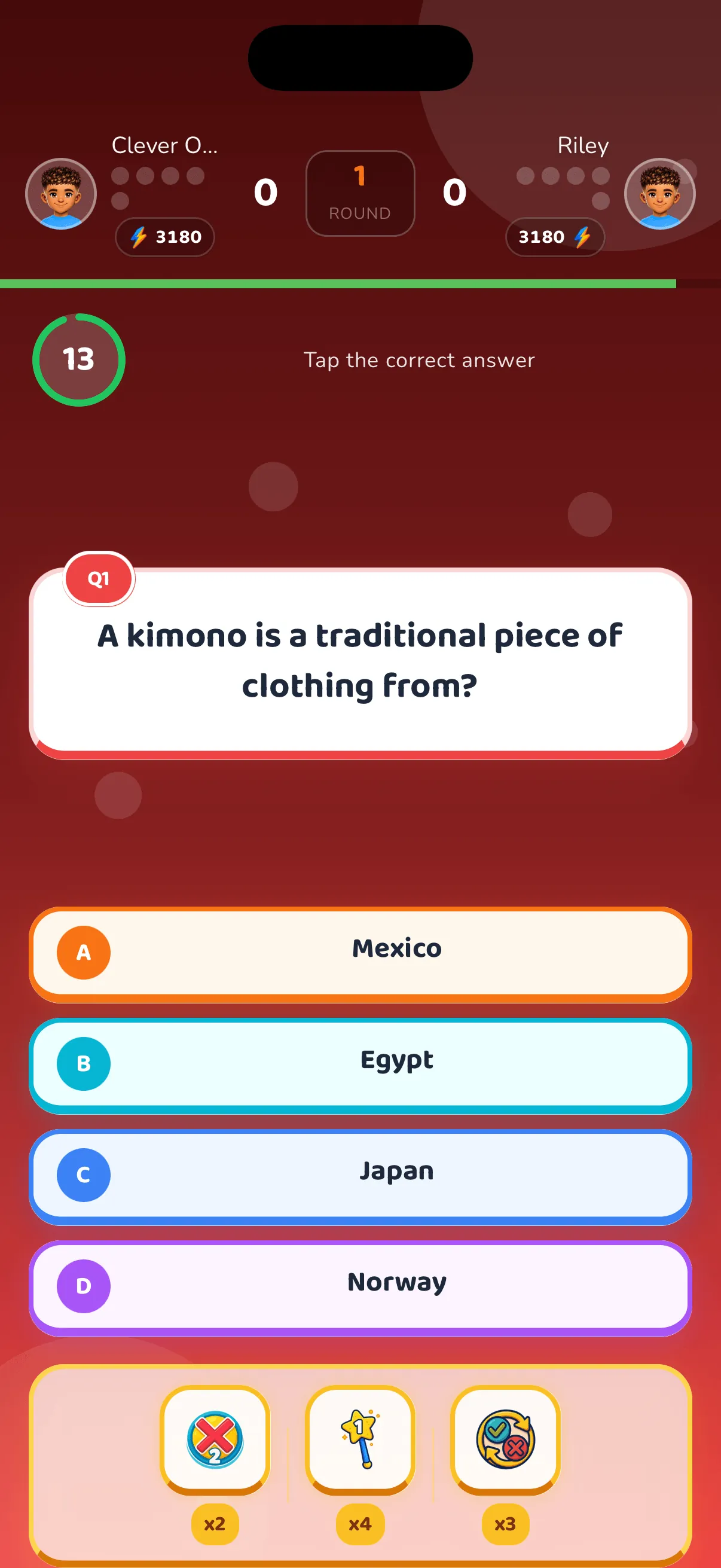
Solo practice, and three ways to play it against someone.
Spin Wheel
Turn-based · spin for a subject · strategic
Speed Duel
Real-time · race to answer · first to 5 wins
Survival
3 lives · both answer · last one standing wins
Why it works
Being asked beats being told
Reading a fact and being asked for it are not the same mental act. Retrieval — having to produce the answer rather than recognise it — is what moves something from a page into memory, and a quiz is the cheapest way to make a child do it.
The second half is feedback. An answer marked wrong teaches nothing; an answer marked wrong with the reasoning attached teaches the thing the question was about. Every round here explains itself before moving on.
In class
It works beside teaching, not instead of it
Because every question is mapped to a curriculum topic for a grade, a quiz round practises what was taught that week. Schools get reporting per topic, so a class that keeps missing the same thing is visible before a test makes it obvious.
Questions about the quiz format
What is an educational quiz game?
Learning delivered as short question-and-answer rounds with game rewards attached. In BrainRush the questions are real Grade 1–6 curriculum content, so playing a round is practising a topic.
What quiz modes does BrainRush have?
Solo rounds in any subject, plus three 1v1 duel modes with different rules for winning. Weekly and seasonal leaderboards sit on top of all of them.
Is it suitable for classroom use?
Yes. Questions are mapped to curriculum topics per grade, and schools get per-topic reporting across a section or a whole year group.
Are the questions multiple choice only?
No. There are multiple choice, true or false, fill-in-the-blank and flashcard rounds, so a child is not only ever recognising an answer from a list.